Saturday, 27 March 2021

Working in my garden ... and Max's ... and Sam's

So Bulb say they have switched me back to dual-rate tariff and will give me £30 compensation in return. I haven’t responded yet. I think £30 is a bit mean. I still feel grumpy with them and I’m minded to move supplier. I’ll have to compare prices carefully.

I could set myself up as a garden handyman. This week, I have been to Max’s on Wednesday and Sam’s yesterday doing jobs.

Max’s neighbour loves gardening but has a very small garden. Nevertheless, she has planted six silver birches and has a border with soil mounded against the fence between hers and his. This has rotted the bottom board and when she waters the border, water and soil run into his garden, across his path.

We have replaced the bottom board and I’ve treated the whole fence with wood preserver. It hadn’t been done for a while, so soaked up the preserver. I’ve got another third of the fence to do and also to tidy up his raised beds. That’s a job for next Wednesday. I also went for a long walk with Max, Alice and Ollie around Syston. Alice had not slept the night before and both Inna and Max were a little frazzled. Inna was out wheeling her around town when I arrived and then she fed her and handed over to Max and I for another walk and (hopefully) sleep. She did nod off after about 20 minutes, so we kept walking and then, when we got back, she stayed asleep in the pram.

I didn’t really get to see her as she was still asleep at 5pm when I left for home. I wasn’t going to risk waking her just to have a look!

Yesterday (Friday) I went to Sam’s in Soham to help him put a section of fence and a screen at the end of his garden. We got the job done and made nice work of it, too. It’s a small section right at the end of their garden just in one corner. The chain-link fence at the top of their wall is broken down and it looks as if people have been coming in.

A neighbour told Sam that someone had come through the garden and broken into houses at the side of his house. Apparently, this was when the previous owners had been there and they’d piled up old conifers in the corner. Sam has had those removed (we dug a lot of compost out to fill in the pond) so the corner is now accessible again.

We put in new fence posts, pulled up the old mesh fence that had been trodden down and added new wire above it, also bamboo screen so it’s harder to see in. I completed the security screen by adding a small holly seedling I found in the border. I suggested they add a new laurel, so the line of laurels goes all the way down the garden. We finished off by digging out some old, rotten compost bins and then making three new ones from some old pallets. Sam burned a load of old wood on a bonfire, so the bottom is much more tidy.

It’s a big garden and will take them a lot of time to look after. Sam has had three large yew trees removed, which makes the side of the house much lighter, and also the lime trees along the road pollarded. The laurels really need a good trim and Sam is having the lawn re-laid with turf in the next month. The old lawn was badly damaged by leaves being left lying on it and also by moss.

Saoirse, me and Arthur having dinner after working in the garden.


Arthur and Saoirse came home at about 5pm. They were very exited to see me and also the bonfire (probably the bonfire more than me). I had a little play with them and sat while they had dinner. It’s a long day at school/nursery for them both.

Arthur was very keen to show me his new bedroom. He’s obsessed with the army and soldiers at the moment and his bedroom has a camouflage theme. Saoirse is campaigning to have the same in hers.

It was quite a stormy day and we were lucky to get so much done between heavy rain showers. Driving home, Ely cathedral looked wonderful against the stormy sky and there were some wonderful cloud formations across the flat fens around Chatteris, Manea and March.

Saturday, 20 March 2021

Bending the lockdown rules


Perhaps I shouldn’t be so grumpy. The man from British Gas (or rather a third-party plumbing company contracted by British Gas arrived and duly put in a new ballcock. Problem solved. Also, I managed to call Bulb to complain about the electric bill and I managed to get through after only about 10 minutes. The person in the call-centre seemed mildly interested in what I was saying and said she’d refer it to “the team”.

I don’t hold out much hope. I did have it confirmed that they’d switched my account to single rate, rather than a cheaper night rate, so I’m not happy. They have also put prices up this week!

Lockdown continues with a small easing of restrictions at the beginning of this month to allow children to go back to school and allow you to meet two people outdoors. I have been bending the rules (past breaking point) by going to see Max and Inna and taking Alice for a walk. Margaret won’t go with me.

People are breaking the rules right, left and centre, but I don’t think they’re all being reckless. I know only two or three of my friends who are sticking rigidly to the rules. Even Margaret (a stickler for rules) has bent them a little. It is hard. We’ve had massive restrictions placed on what we can do, who we can see and where we can go and people are a bit fed up with it. As more and more people are vaccinated (we had our first dose on February 10 of the Oxford AstraZeneca vaccine) they feel safer and more inclined to break the rules.


Well, it’s been nice to see Max and Inna and to meet Alice for the first time. I’ve seen all my other grandchildren within a few days, sometimes within hours, so this was very odd. It has been bad enough for us in lockdown, but for new parents it’s been an extra challenge in a challenging time. Alice seems quite a good baby and, although sleep deprivation has been an issue (of course) they are managing quite well. Max has about eight months work left on his PhD and Inna is due to go back to work in June.

Marina (Inna’s mum) will have Alice two days a week and Max will have her another two. I think Margaret and I will be able to help out too, but we’ll have to sort something nearer the time.

Arthur and Saoirse are staying with us this weekend. Lucy dropped them off after school/nursery last night. Arthur has thrived at school. He’s changed a lot and has learned lots since he started in September. Saoirse is a real charmer. She’s a very happy child, confident and talkative. She loves to jump off things. They woke up at 6am this morning. I’ll take them back to Soham on Sunday night.

Tuesday, 16 March 2021

A grumpy start to the year

It’s March and I’m feeling grumpy. The ball-cock in my cold-water header tank has failed and was pouring out last night. I’ve had to turn off the water and I’m waiting for a British Gas engineer (they run our plumbing cover).

On top of that, my electric bill jumped from £70 per month to £240 month in February (which was a milder month than December or January). I had a new smart-meter installed last year because I thought my old one was over-reading. My bills had gone down, but now this. Trying to get any sense out of a call-handler at Bulb will be next to impossible.

It’s surprising how a couple of relatively minor setbacks can make you feel miserable. I need to get things in perspective.

So what have I been up to this year? Due to Covid, a family Christmas was cancelled. We were not able to see Max, Inna and our new granddaughter Alice; or see Sam, Lucy, Arthur and Saoirse. Tom, of course, was in Ecuador. We did manage a Zoom meeting with Sam and Max and, later on, another with Tom, although the connection in Ambato wasn’t too good. It’s not the same as seeing everyone – obviously.

My sister came round for Christmas lunch, which was possible under the stricter regulations, so that was our Christmas. She had been hoping to see Alex and their plans for a weekend at one of the flats at Sutton Hoo was also scuppered. What wrecked Christmas? Was it the new Covid-19 variant that has proved far more virulent or was it more government incompetence in opening schools and universities with no management plan? Probably a combination of both and we now have three variants to worry about – Kent, South African and Brazilian. There are more, of course, and more will be spawned while infection rates remain so high.

I cannot believe how badly this has been handled by government and yet how unaccountable they remain. More than 125,000 people have died (within 28 days of contracting Covid) and yet the polls suggest people would still vote for them.

Tom arrived back in the UK on January 2, flying via Madrid on a packed plane. I went to pick him up. His return meant that we all had to self-isolate for 10 days, but within a couple of days, we heard that Carlos, Lucy’s dad, had tested positive for Covid and they’d all been together at Christmas. Tom had a Covid test and proved positive. Margaret and I had tests, which were negative, and we felt sort-of-all-right, although it’s hard to say you feel great when there’s a Covid case in the house. Tom was confined to his room and we faced an extended quarantine. Luckily, Tom had relatively mild symptoms. Carlos also recovered well. It had been a worry because his sister died from Covid last year.

Tom had come back to the UK and left Lucy, Julia, Aureliano and Florencia in Ecuador in order to try to get his business back up and running. It was a tough ask with lockdown rules tightening. He has managed to get a little work, including a couple of commercial jobs – filming “how-to” videos for fitting motorcycle accessories, also filming a local farmer’s cattle for an advert selling the beasts.

Friday, 1 January 2021

Books I Have Read in 2020


This has been a very strange year. We have spent many months in lockdown, unable to travel, sometimes unable to leave our homes, due to the Covid-19 pandemic. One thing it has done is allow me more time to read. I have read more books this past year than I have in the previous decade!

This is what I have been reading.

Un Hombre Fascinante – Juan Fernandez

Here’s one from my Spanish classes with Peterborough U3A. We did this one with the intermediate class.

Juan Fernandez is a Spanish teacher in London and his books are pretty good. Quite repetitive, which is helpful for students, but there’s always a decent narrative and he does cover some adult themes – they’re not for kids.

Hola Lola – Juan Fernandez

Another Spanish language book by Juan Fernandez. We did this with the U3A Basic Spanish class and it’s a good starter book with simple language, very repetitive but with some characterisation and a sensible narrative.


The Big Show – Pierre Clostermann

I have read quite a few books on the Second World War this year. I discovered a podcast by Al Murray and James Holland called We Have Ways of Making You Talk. It’s all about WW2 and it’s very interesting, entertaining and easy listening – ideal for lockdown.

This is one book which was referred to in the podcast. Pierre Clostermann was a French pilot who volunteered to fight in the RAF and this is his story of the war.

It’s grim reading at times (he lost lots of good friends and his nerves were shot by the late stages of the war) but his experiences are gripping. I particularly liked it because he seems to have a very good mechanical understanding of aircraft and aero engines, which comes through in his writing.

He starts out flying Spitfires, then moves onto the Typhoon in a ground-attack role and, finally, the Hawker Tempest (a beast of an aircraft which sounded terrifying to fly).


The Places In Between – Rory Stewart

Rory Stewart may have been the last decent Tory politician. He was against Brexit, but pragmatic enough to agree that the Leave campaign had won the referendum and that we should leave the EU.

He stood for the leadership of the party after the resignation of Theresa May and we’d surely be in a much better place now had he won.

His career has included the military, diplomatic roles, working with NGOs and charity organisations. He probably also had some kind of role in intelligence. He was a Tory MP (briefly) and was planning to run for London mayor as an independent, but Covid caused the election to be postponed and he has dropped out.

The Places In Between is an account of a journey across Afghanistan in 2002 just as the US were getting involved. Stewart had already trekked across Turkey and Iran and wanted to walk across northern Afghanistan following a mountain route taken by the Mogul emperor Babur The Great.

Travel books and modern history are my two books of choice and Stewart is a great travel writer. The journey, however, is unremittingly grim. The weather is cold, the people are poor, distrustful and sometimes unwelcoming and the country has been absolutely wrecked by warlords, religious fanatics and interfering outside powers – from Tamburlain and Babur, through to the British, Russians, Taliban and Americans – have basically wrecked the country. No-one properly understands Afghanistan, but everyone seems to think they can sort it out. Read Rory’s book and leave the place well alone.


Big Week – James Holland

I read three books by James Holland and this was my first. Big Week refers to one week in 1944 when the USAF and the RAF undertook a massive bombing campaign against Germany in the Second World War. The aim was to destroy the Luftwaffe by targeting aircraft factories, ball-bearing factories, oil plants and (by the employment of long-range fighters such as the Mustang and Thunderbolt) shooting them out of the sky.

Both American and British bomber forces suffered massive losses, unsustainable losses at various points, but the Germans were suffering equally. Big Week didn’t destroy German resistance, but it was a step towards gaining air supremacy and paving the way for the invasion and liberation of France.

Big Week follows (I now realise) the James Holland formula of choosing a battle or campaign, looking for some established opinions he can knock down and also using lots of eyewitness accounts to add colour and drama. It does make for easy-to-consume history, very readable and a serious study in spite of its popularist target.


The Fens - Francis Prior

Francis Prior is the only author that I’ve met among the collection of books read this year. I met him a couple of times when I was working on newspapers in Peterborough and he was excavating the Flag Fen prehistoric site.

This book covers his life’s work as an archaeologist in the Cambridgeshire Fens and it is amazing what a rich history this part of the world has had. You’d think the Fens were waterlogged bog until the drainage campaigns from the 17th Century onwards, but not so. Neolithic farmers would have enjoyed firm ground under their feet across much of the land even as sea levels started to rise and, as the land began to suffer flooding, amazing structures like the log causeway across the fen from Peterborough to Whittlesey were built.

It’s staggering what lies under our feet.


And No Birds Sang – Farley Mowat

Farley Mowat was a Canadian who volunteered to fight in the Second World War. This is his account of his wartime experiences.

He signed up for his father’s old outfit, the Hastings and Prince Edward Regiment (known as the Hasty Ps) and found himself entering the war at the invasion of Sicily. The book covers his experiences during the conquest of Sicily and, later, in Italy.

Two things make this personal account of the Second World War stand out. There are many such books, and all offer a personal insight, but few are written as well as this and few have such astonishing feats in battle.

One section includes an assault on a German strongpoint in Sicily which is sited in an old Norman castle which has never been captured in all its history. The Hasty Ps climb a cliff in darkness carrying all their kit and take the garrison by surprise. They manage to capture the place and hold it until advancing, supporting troops arrive.

During the battle, Mowat witnesses a German sniper shooting a donkey. Sadistically shooting the animal in each leg for no good reason, the animal is then left to die a slow death until one of the Canadians puts it out of its misery. The incident clearly horrified Mowat and, in Normandy, my dad seemed more horrified (or more able to talk about his horror) when seeing hundreds of dead horses and cattle. He never talked about dead bodies.


One Man’s Window – Denis Barnham

This book was also published under the title Malta Spitfire Pilot. The author, Denis Barnham was an artist pre-war, who found himself in the RAF flying Spitfires. This book is an account of the time he spent in Malta as a part of one of the first Spitfire squadrons to be sent to the besieged island. Malta, which had great strategic importance to both Axis and Allied powers, was being attacked by Italian and German aircraft and was the most bombed piece of land anywhere during the Second World War.

It was defended by outclassed Hurricanes, which couldn’t climb quickly enough to be above bombers and fighters and so were ineffective in defence and suffering undue losses. Finally, Spitfires were sent – taken to the Mediterranean by aircraft carrier and then flown hundreds of miles across the sea to reach Malta.

Barnham is a sensitive man (he really only wants to be back with his new, and very pretty, wife and to paint and draw), he’s a self-confessed lousy shot, but a brave and tenacious pilot. Apart from bombs, bullets and no letters from his wife, the worse thing about his experience is the “Malta dog” … dysentery – which everyone suffers from.

This isn’t a glorious tale of tough battle and eventual triumph; it’s a carefully observed window in amazing detail of a horrific battle that went on and on. Barnham is eventually invalided out, which probably saves his life. He’s wracked by dysentery and his nerve has gone. If you think flying Spitfires would have been a glamorous thing, this book will set the record straight. Barnham doesn’t complain about his lot, he gets on with it and he tells it like it was.


The Good Shepherd – C S Forester

This is fiction, not fact, but Forester’s book might be better classed as a docu-drama in today’s media-speak. It has also recently been made into a film, starring Tom Hanks (who else?) as the captain of a US destroyer escorting an Atlantic convoy.

I read the book before I watched the film and the book, in my opinion, is much better. It captures the massive tension of being on a ship hunted by an invisible enemy and suffering from intense fatigue. And the book is set at a time of the war when the Allies had the benefit of improved radar and sonar to help alert them of the presence of submarines and to become the hunters.

It must have been absolute hell in the early days of the war, when escort ships were held back to guard against a possible invasion and when technology hadn’t swung against the submarines.


Quartered Safe out Here – George MacDonald Fraser

George MacDonald Fraser is a well-known author, famous for writing the Flashman books (Flashman being the bully from Tom Brown’s Schooldays, re-imagined in adult life as a cad and cowardly army officer). He also wrote the screenplay for the James Bond film Octopussy.

Quartered Safe Out Here is a different kettle of fish, it’s MacDonald Fraser’s account of his time in Burma fighting with the Border Regiment, a group of Cumbrians from the Carlisle area.

They are an experienced group of men and George is the new man. He joins the war when the tide has turned against the Japanese in Burma and, perhaps, his war experience is not as terrible as those of his comrades.

There is a battle narrative to the book, but the most interesting aspect is the relationships between the different soldiers (an odd mix) and how they get along. Sometimes they don’t and this leads to some extremely sad and angry recollections, even tragedy. MacDonald Fraser is different from the others, he’s middle class, and is promoted to corporal (a job he does well) and eventually lifted out of the war for officer training.

Burma and the Far East campaign was essentially a colonial battle. Britain had colonised India, Burma and Malaya and the Japanese wanted to run them instead. The people of those countries being fought over were perhaps the real victims of this conflict (and they are mentioned with sympathy). Having fought to keep our colonies and won, the UK had to grant them all independence within a few years.

In Burma’s case it was 1948. Various elements of the population, divided by ethnicity and religion, fought for the British and Japanese, so it was no surprise that, after the war, factional fighting and assassination preceded independence. This year (2021) there has been yet another military coup and that after a decade of “ethnic cleansing” carried out against Muslim Rohingya people. It’s yet another post-colonial mess we’ve left behind.


By Tank D to VE Day – Ken Tout

Once lockdown is over and if we ever get on top of Covid-19, I want to properly research the wartime experiences of my mother and father, also Margaret’s dad. Both fathers were involved in the Battle for Normandy and fought in France, Belgium, Holland and Germany. I can’t undertake any research right now, so I’ve been reading quite a lot of history around the latter phases of the Second World War in order to gain a better understanding of what it was like and also to put other people’s experiences against place names and battles.

Ken Tout, as the name of his wartime memoir suggests, fought in a tank regiment – the Northamptonshire Yeomanry as a gunner. His job was to aim, fire and maintain the main gun. The Northamptonshire Yeomanry, as the name suggests, were a territorial group and called into the army as soon as war was declared. Like several other similar regiments (notably the Sherwood Rangers) they were converted to tanks and Tout fought (mainly in Shermans) from D-Day to October 1944 when he was invalided home due to bursitis in his left knee, possibly caused by repetitive-strain injury from stamping on the gun’s firing mechanism.

Tout was unlucky, but also lucky, as his injury took him out from the war and back to the UK. His book continues in his absence, chronicling the Yeomanry’s war until VE Day. It has a detailed account of the Rhine crossing using Buffalo amphibious tank and infantry carriers. My dad’s Rhine crossing was in a Buffalo. He told me about it when I was making an Airfix model of one. Like many other war memories from dad – bren carriers, 25lb field guns, Churchill and Sherman tanks - they were prompted by Airfix modelling. When (and if) I ever get around to writing an account of Eric Rayner’s war, I’ll certainly draw on the account of the Rhine crossing by Ken Tout’s former comrades.


Burma ’44 – James Holland

After reading Quartered Safe Out Here by George MacDonald Fraser, I was tempted to read a little more about the war in the Arakan and James Holland wrote this book about the Japanese offensive of 1944 and the Allied response. It takes a broad view of the Burma campaign to date and enters the battle at a time when the Allies were planning to go on the offensive. The Japanese have the same idea and launch their attack just before ours. It prompts a number of strategically important desperate stands by Allied army units, but also marks the turning point of the war in Burma and India.

Holland’s book centres on the Battle of the Admin Box in February 1944, just before the desperate battles of Imphal and Kohima when the Japanese were turned back just within India. It was significant as the first time the Japanese army had been defeated and also helped develop and test new tactics involving supply by air and holding ground rather than retreating to avoid being cut off.

The defence of the Admin Box, admin centre of the Indian Army’s 7th Division, was desperate and close-run. The Japanese successfully infiltrated the area on a number of occasions, including one where the hospital was captured and doctors and patients murdered. This war crime stiffened the resolve of the defenders, and the Japanese, who had gambled on a quick victory, began to run out of food and ammunition.

Critical to the successful defence of the position were a number of Lee tanks and the use of Spitfires, which were able to gain air superiority over the area and allow the defenders to be resupplied by air-drops. I’ve enjoyed a number of James Holland books this year. This was a hard read due to my lack of background knowledge, also a string of hard-to-pronounce names such as the Ngakyedauk Pass. The temptation is to “bleep over” them all, but then you soon lose track of what’s what.


Serenade to the Big Bird – Bert Stiles

Bert Stiles flew Flying Fortress bombers from English air-bases during the great bombing offensive on Germany during 1943 and 1944.

They suffered horrendous losses in the early stages before long-ranger fighter escorts could be provided. The book gives an insight into the physical difficulties of flying one of these large bombers in close formation (something Stiles found very taxing), but also the massive psychological strain of mission after mission when the losses were so high. Perhaps some people could adopt an if-it-happens-it-happens attitude, but most would have taken off in the knowledge that, statistically, there was a chance that they would not be returning.

Stiles completed his tour but chose to convert to fighters and was killed later in the war.


Stalin’s Nose – Rory MacLean

I do like a good travel book. This one was a little left field in its construct. The author has a great aunt of semi-aristocratic Austrian descent, who lived with her husband (a Soviet espionage officer) in East Berlin. The Berlin Wall former part of the boundary to their garden and when it was pulled down, all their livestock escaped.

The aunt is widowed and persuades her nephew to take her with him on a journey into eastern Europe (only recently freed from Soviet control). Travelling in a two-stroke Trabant and taking his aunt’s pet pig with them, they journey across Austria, Czechoslovakia, Bulgaria, Romania, Ukraine, Poland and Russia. They meet people scarred by the Second World War and by Soviet rule.

One wouldn’t have wanted to be caught between Stalin and Hitler but, of course, millions were. MacLean finds small cameos of lives destroyed, people surviving, scars still healing … It would be a very hard read, except for the comedy elements of the pig and his aunt, but it’s clear that, in eastern Europe, there are a lot of historical issues to resolve.


The Ship – C S Forester

After reading the Good Shepherd, about a destroyer escorting an Atlantic convoy, I decided to read The Ship, which is about a cruiser escorting a Malta convoy.

The Good Shepherd’s charges are threatened by U-boats, but in the Mediterranean, the threat comes from Italian aircraft and surface vessels.

The Royal Navy was an exceptionally well-trained and professional outfit during the Second World War. Sure, they had their setbacks and cock-ups, but compared to the Army, they were streets ahead. There might still have been an old-boys network thwarting promotion purely on merit, but at least the navy’s “old boys” had been trained and blooded.

Forester paints a propaganda-like image of the skill and daring, but it’s entirely believable and quite gripping.

The escort cruisers and destroyers have just beaten off an Italian air-raid, but now face the threat of attack by more powerful Italian battleships planning to intercept the convoy. Their defensive strategy and battle tactics are fascinating. It’s a great read and, in spite of its glowing admiration for the Royal Navy, it’s certainly highly accurate.


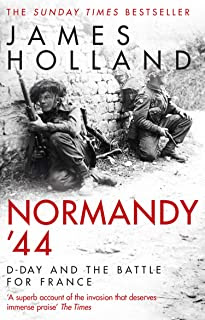
Normandy 44 - James Holland

This was the modern history book I most wanted to read in the context of understanding my father’s war.

Like other books by James Holland, it is a mixture of historical facts, a re-examination of events and commonly held views, with a large number of personal stories (from both sides).

It has added massively to my knowledge of the Battle of Normandy and has increased my desire to properly research the wartime experiences of my father and father-in-law. I just need life to return to some normality.


Crimen en Barcleona – Paco Ardit

I’m some way short of being able to call myself a polyglot, but I have read a number of Spanish-language books.

This is the latest – a B1-level novel about murder, investigation and family intrigue, set within an airline business in Barcelona.

The language is fairly simple (being lower intermediate level), but the story and plot twists are quite complex and adult.

Saturday, 26 December 2020

A Tier 4 Coronavirus Regulation Christmas


Saoirse in her Christmas jumper
Christmas in lockdown, or Tier 4 as it’s called, wasn’t too bad.

We should have been in Soham – Sam and Lucy’s first Christmas in their new house – and we were a little disappointed to miss out. My sister was expecting to have Alex up for five days or so, but he was also caught up in the late lockdown, so we said she would be our bubble and she could come round for Christmas dinner.

Plenty of people are breaking or seriously bending the Tier 4 rules and you can hardly blame them. There’s no proper strategy from the Government, they just react late to every new development and the rules have changed so much, it’s hard to know what you can and can’t do. Some people don’t even know which area they’re in!

In the morning, we set up a Zoom online meeting for Sam and also for Max and Inna to join us [you can see it here: https://youtu.be/Occ97KGJHBA]. It actually worked pretty well and it was good for Sam to be able to have a chat with Max and to see baby Alice, who had slept through most of the night. Arthur was keen to show off some of his presents. He’d got some toy soldiers and had set them up in a defensive line across the kitchen door. Lucy and Sam could step over them, but they took a few casualties when Saoirse needed to get by.

I think Christmas was a little overwhelming for her. She hid her face and burst into tears when we started the video link, but soon settled down. She had a pair of swimming goggles on her head (and over her eyes) for much of the time.

Max and Inna seem to be managing well. Alice had been sleeping very little during the night and has been either feeding or crying. She was awake and happy enough to be jigged in Max’s arms while we were all talking. It’s a shame that we’re not able to see and hold her.

First taste of Christmas pudding. It
seem to be going down well.

They are getting some support from Marina, Inna’s mum, who has formed a child support bubble with them and had been bringing food, shopping and helping with the dog. Ollie stayed with her while Inna was in hospital and now considers Wigston his second home. Max says he gets so excited when he sees Marina that he does backward somersaults.

Later in the day, we linked up with Tom on Zoom [link: https://youtu.be/pFfCGraF3w8]. He was in Ambato and we were able to see Julia and Aureliano open presents we’d got for them. Quacker had a book and Julia a loom, which seemed to offer no instant pleasure, just frustration, as it needed to be assembled and would require some supervision.

She cheered herself up by scooting very fast around the deserted hospital corridors. Lucy and Florencia were in the house, so we didn’t see them. I did get a look at Pink and Hatchi, however.

There was no white Christmas, but it did freeze overnight and there was a bitter north wind when I took Holly for her walk. I bumped into Thornton Holmes in the park, who was walking his two spaniels. They were very pleased to see us (well pleased to see Holly, and then me when they realised I had a biscuit in my pocket). He’d been told off by a couple with two pugs because his dogs were “not under control” and he was a bit grumpy about it. “They’re just being friendly,” he insisted. I didn’t need to be convinced; I have considerable experience of owning “friendly” dogs!

There were other dogs in the park, and I was mobbed by a terrier and a small lurcher. Margaret has been walking Holly most days and is ingratiating herself with the local dogs by feeding them biscuits. They saw Holly and thought “treats!” but hadn’t accounted for mean Eric being in charge today.

We also bumped into Pauline and Chris at the traffic lights. They had probably walked Jasper around Toneham. He was very excited to see Holly and she to see him. Like us, they’d been talking to children and grandchildren via video links and were set to have a WhatsApp meeting with Rebecca in California that evening.

It has been a strange day, not like any previous Christmas, but then 2020 has been a year like no other.

Sunday, 20 December 2020

Christmas is cancelled!

What a shower we have running this country. I can forgive stupid statements such as “it will all be over by Christmas” as they were made back in spring and there was little information to go on.

However, this past week, the government has threatened to take legal action against councils for closing schools early and, at Prime Minster’s Questions on Wednesday, Bojo the Clown lambasted the opposition for “wanting to cancel Christmas”.

Guess what? Everyone else could see what was coming, except those in charge.

Now, Kent, London, big chunks of the home counties (and Peterborough) have been placed into a new, stricter Tier 4, while the rest of the country have had new restrictions applied over Christmas. Instead of a five-day holiday from lock-downs, we have one day to see family (Christmas Day).

For us, in Tier 4, Christmas is cancelled. We are not allowed to travel into a lower tier area, which means we can’t go to Sam’s for Christmas Day (Soham is in Tier 2) and we can’t go to Max’s to see baby Alice – not even through the window (Syston is in Tier 3).

It’s quite depressing. I’m sure the measures are required, but the government is always behind the game. They are a complete shower!

Margaret said last night (the restrictions were announced just after 4pm yesterday) that this would be the first Christmas in over 40 years that we have spent on our own. I’m not even sure that’s true. I can’t remember a Christmas all alone – it always seemed that before we had children of our own, we spent the holiday at my dad’s and visited Margaret’s parents and my aunts.

Anyway, there is nothing we can do. We should be grateful, at least, that we’re healthy, warm and safe and have no money worries. Peterborough does have a high rate of Covid-19 infection, although Thorney has very little. We can’t go to Whittlesey (four miles south), Crowland (five miles north) or Thorney Toll (five miles east).

These certainly are strange times. The one bit of good news is that vaccinations are being rolled out slowly. The over-80s are the first group to get them and several people we know have been vaccinated – Bert and Irene (both in their 90s – went to Peterborough City Hospital to have theirs. They need a second jab in the new year to be fully covered. We hope new vaccines will get approval soon and we will all be offered one in the coming year.

Wednesday, 16 December 2020

Welcome grandchild No 6


I was woken up in the early hours by Margaret, who has been monitoring her WhatsApp messages all night waiting for news …

Max and Inna’s baby was born at 3.50am. We don’t know any more than that at this stage. No weight and I’m not absolutely sure of the name, although I’m running with Anya.

She has been keeping everyone waiting for just over a week and Inna had to go into hospital to try to kick-start labour on Monday (it’s Wednesday today). It’s been quite a marathon!

So, Anya becomes my sixth grandchild and Max and Inna’s first child. I’ve had one grandchild every year since 2015. Funnily enough, I’ve become more and more anxious about each one. Julia, Arthur and Aureliano presented no particular worries to me (although plenty for their parents, I'm sure).

With Saoirse there was a concern that there was some kind of foetal abnormality on a scan and they wanted to do some more tests. Sam and Lucy said no and, of course, Saoirse is absolutely fine. Florencia caused some concern with early contractions after a bumpy trip to Santo Domingo and with later scans, too. Lucy had to get a second opinion and (of course) we had the added problem of a flight from Quito to Mexico City and then a long plane journey to London. We upgraded Lucy to first class so she had a bed and, again, Florencia was fine. I was so worried that she'd arrive at 35,000ft over the north Atlantic.

Max and Inna were worried that Anya, who had been a real wriggler, had stopped moving. I think this caused also some concern for us with one or more of ours and might be that the baby is just settling down for the “big push” as it were. Anya seemed very happy where she was and in no hurry to make her entrance; the hospital was able to monitor her heartbeat but said they’d induce contractions if there was nothing by Monday, so that’s what happened.

We had some concern when there was meconium in the “waters” but she’s been checked and there’s no sign of her having ingested any into her lungs, so we can relax a little. Max is heading home for some sleep and Inna and Anya will be transferred to a smaller post-natal centre in Melton Mowbray.

I don’t know when we will be able to see or hold Anya. Leicester is in the strictest Tier 3 Covid-19 restrictions and Peterborough may move from Tier 2 to 3 tomorrow. Apart from all the hazards of birth, there’s still Covid to consider. Infection rates are high (20,000 new cases and 500 deaths per day) so we have to be careful. Oddly, some people still don’t believe Covid exists. They say it’s just a regular cold, but a bit worse, and that the government is in the hands of evil scientists trying to control us. I suppose Brexit should have made it clear that there are a lot of gullible people out there but, honestly, the crass stupidity of some folk doesn’t bear thinking about.

Footnote: So I'd almost written all my Christmas cards telling friends and family about Anya, when we got a WhatsApp message from Max to say they had decided to call the baby Alice Marina (Marina after Inna's mum). Alice is a very nice name and it's good to have Marina continuing into another generation.