Sunday, 26 April 2020
20,0000 dead and counting
Saturday, 25 April 2020
Living with Saoirse
Tuesday, 24 March 2020
What strange times we're living in
Wednesday, 1 January 2020
Books Read in 2019
These are the books I have read during 2019
The Wild Places by Robert Macfarlane
This was a
65th birthday present from Max and I found it quite a hard book to
read (which is why it took me almost six months). I kept reading it and putting
it down for a month until I finally finished it in early January.
Macfarlane
poses the question: are there any truly wild places left in the British Isles?
I guess that depends upon your definition of “wild”. There are some wild places
in Thorney – my allotment until I took it over and the patch of land next door
hasn’t been disturbed for 15 years.
So my
definition of wild is probably much less rigorous than Macfarlane’s. He sets
off to visit a list of places he has identified as fitting his definition and
they include remote islands, coastal strips, bogs and mountains. The usual
suspects are there – Rannoch Moor gets a chapter – and I found his writing in
the first part of the book a little unconvincing. There didn’t seem to be a
connection, he didn’t seem comfortable or happy in the places he wanted to
experience.
He did seem
to visit them during periods of extreme weather and there was a piece about
spending the night on the summit of Ben Hope in the middle of winter, which
sounded quite reckless (unless he was exaggerating his predicament). In the
latter part of the book, he seemed more at ease with the “wild” environment he
was visiting, but it was a lot less wild Norfolk, Suffolk and Essex coasts,
lost holloways in the south-west … These were the more interesting bits, but
then he’s off again trying to find an arctic hare in Derbyshire in the middle
of a November storm.
I’m going
to pass the book on to Sam who has been watching and enjoying the YouTube
channel of a chap in North America who goes wild camping in the woods.
The Spanish Civil War by Antony Beevor
I knew very
little about the Spanish Civil War, except that when I was little Franco was
still something of a bogeyman. Spain (and Portugal too) was a place you didn’t
want to visit – run by a fascist dictator, backward, dominated by the Catholic
Church (and don’t forget what they did in 1588). My knowledge of Spain was
limited to what we read in the Daily Herald – they killed bulls for fun, they
threw donkeys off church towers, you could be arrested for wearing a bikini.
Later, I
read Ernest Hemmingway’s For Whom the Bell Tolls and then Laurie Lee’s As I
Walked Out One Midsummer Morning and A Moment of War. Later still, I read a
little about the Anarchist movement in Catalonia and I have been referring to
events in the civil war during my Spanish lessons. Poets, composers and artists
we may look at during lessons (such as Manuel de Falla) were greatly affected
by the war. Falla, the greatest Spanish composer of the 20th
century, lived in exile after the war and refused to return to Spain despite
being offered a generous pension by Franco. The Gipsy Kings were descendants of
Basque gipsies, who were forced to flee to France after the Republicans lost
the war.
Beevor’s
writing is pretty much a factual, chronological narrative, and is easy to read;
although the complicated pre-war politics and multitude of unfamiliar names do
make you pause quite often and say: “who the heck is he and what side was he
on?”
The
background to the war is one of immense poverty in Spain, with industry
(generally) and land (absolutely) in the ownership of a small, wealthy class.
There was dissatisfaction with the monarchy, including a dispute over rightful
succession, and dissatisfaction among the poorer classes with the Catholic
church. A strong left-wing movement - including socialists, communists and
anarchists – had arisen (especially in the Basque and Catalan industrial areas)
and to complicate things further, there was a desire for Catalan independence,
while the Basque country largely was a semi-independent entity.
The Spanish
‘left’ was an unhappy coalition. The communists (some way from Stalinism) were
the smaller party and not happy bedfellows with the socialists, while the
anarchists, by definition, were not going to fit in anywhere. They wanted
collectivism, no government, no money, no army … The fear of anarchy (it’s
still a loaded word) led to a campaign of fake news against the movement across
Europe. Catalonia in Spain was its strongest place and when allowed to, during
the civil war, anarchists did run factories and farming in a pragmatic,
efficient way. The RNLI, rightly held up as a shining example by many, is (you
could argue) an anarchist organisation.
The war
started when the left won democratic elections in 1936. Leaders of the armed
forces led a coup, which was only partly successful. The navy remained largely
loyal and parts of the army also remained loyal. Franco emerged as the leader
of the Nationalists and, helped by German and Italian military support, he
finally won a bloody war that lasted three years.
Russia supported
the Republicans, but did them no favours. Stalin basically took all the
country’s gold reserves and gave them a few (no enough) weapons, but lots of
communist advisors. His aim was to make the relatively small Spanish communist
party the leader in government.
The role of
Britain, France and the USA was shameful. The British maintained neutrality,
while providing Franco with considerable support; France wished to be more
helpful but deferred to British policy for fear of upsetting its ally and the
USA, led by a strong Catholic pressure group (including the Kennedy dynasty)
also thwarted democratic government.
Had we
supported the Republicans, some argue Hitler may have thought twice about
launching the Second World War. At least, we would have had an ally against
Fascism had WW2 still started.
The most
shocking thing about the Spanish Civil War was its brutality. Franco said he’d
reunite Spain even if he had to shoot half the Spaniards (and that’s pretty
much what happened). His Moroccan mercenaries were ruthless murderers, rapists
and pillagers of conquered territory, while Hitler and Mussolini used the war
as a testing ground for weapons and tactics that would be employed during WW2
against France and Britain.
The bombing
of Guernica is well documented, but Madrid and Barcelona (and many other
cities) were carpet-bombed against the Geneva convention, civilian refugees
were machine gunned by aeroplanes and weapons such a napalm were developed by
the Germans. The causes of Basque and Catalan separatism were ruthlessly
supressed, the ‘national’’ language, Castellano, was imposed across Spain and
church attendance made more or less compulsory.
It’s
extraordinary that all this happened only 80 years ago – one lifetime. What a
mess Europe was in so recently and what a blessing that Spain, Portugal, Italy
and Germany are now democratic governments working together within the EU. What
a shame that some elements, especially within the UK, have now pulled us out of
this movement for peace, co-operation and unity.
Saturday, 12 October 2019
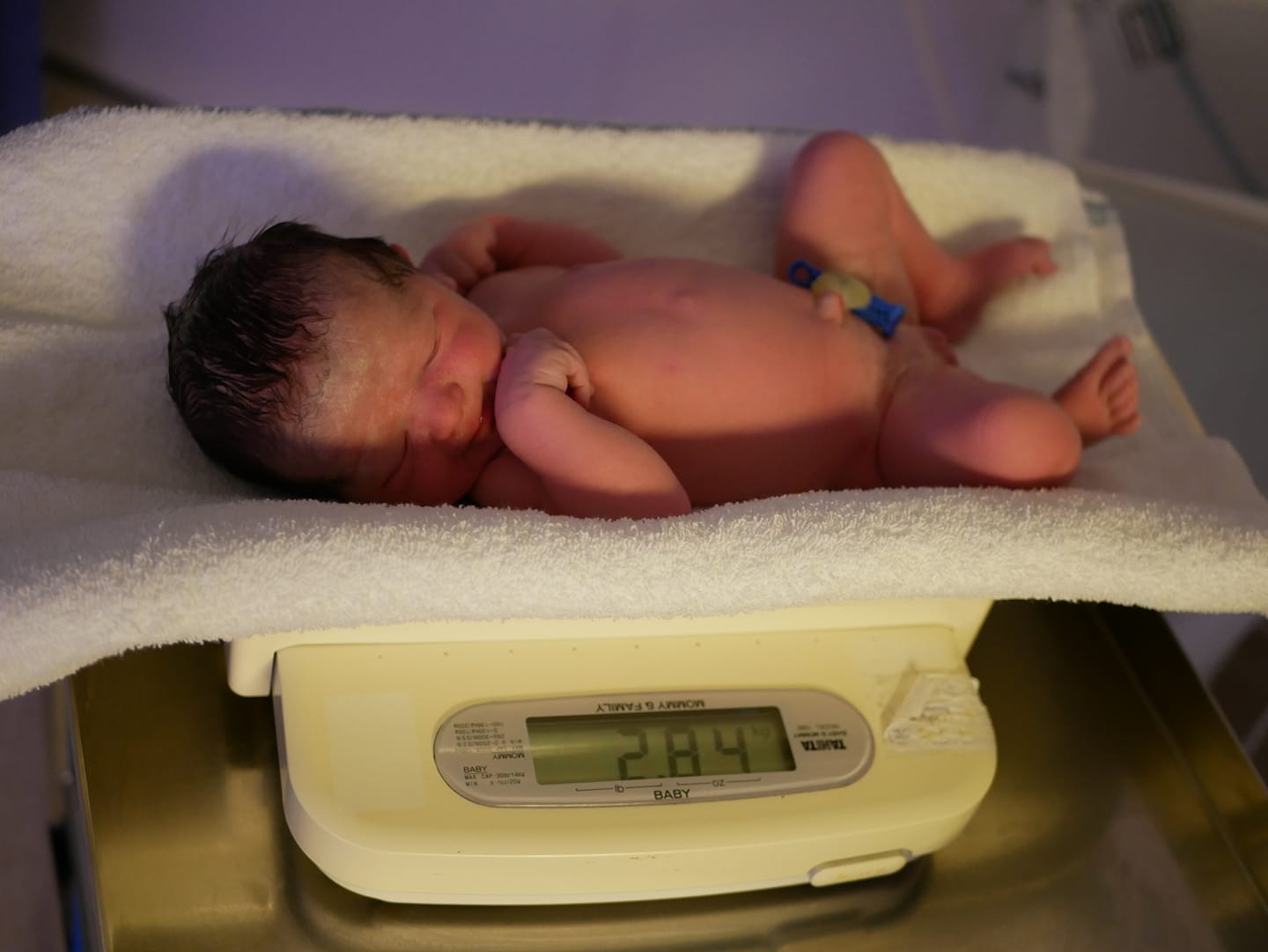
Welcome to Florencia - grandchild no 5
Friday, 30 August 2019
A magnificent panorama of volcanoes
![]() |
| A rare sight of El Tungurahua - normally it's shrouded in mist. Auray has found a flower. © Tom Rayner |
The park is
very well cared for with good paths and well-tended flower borders plus lots of
interesting trees and plants. It’s on the edge of the steep valley which holds
Ambato and, to get there from La Joya (where the hospital is) you have to go
through La Miraflores and Ficoa, the posh parts of Ambato, and up a very steep
road.
From Parque
de la Familia, provided it’s clear like today, there are great views of
Tungurahua and Chimborazo, which feel almost close enough to touch; also Cotopaxi,
El Altar and Sangay. It was a volcano-spotters’ paradise and the higher
peaks were all covered with fresh snow shining in the clear air.
![]() |
| I'm getting a little blase about El Chimborazo, but what a sight it is on a clear day. © Tom Rayner |
I’m getting a bit blasé
about El Chimborazo. It’s an awesome sight, but isn’t it strange how awe fades
into familiarity so quickly? I guess people who live here just look at it as
I’d view a familiar landmark in the Cambridgeshire Fens (although a 20,000 ft
volcano would take some getting used to).
El Tungurahua is less
familiar. Although it’s relatively close to Ambato, it seems to be hidden in
cloud more often than not, so when it does appear like a giant out of the mist,
the effect is shocking. This morning it was there as clear as day, snow capped
and with its top crater tilted ominously towards us.
We could also see some
other clear peaks, which were confirmed by a park warden who passed by and was
happy to stop for a chat. There was El
Altar or Capac Urcu (possibly from the Kichwa “kapak” meaning
great and “urku” mountain. It is an extinct volcano on the
western side of Sangay National Park, with a highest point of 5,319 m
(17,451 ft). Wikipedia says the Spanish colonists named it so because it
resembled two nuns and four friars listening to a bishop around a church altar.
I always like to know how easy it is to get to the summit and Wikipedia says El Altar is the most technically demanding climb in Ecuador. Apparently, December to February are the best months to attempt an ascent. There’s also a more accessible hike to the lake within the caldera of the mountain. From Riobamba, travel to Candelaria and then check-in at the ranger station to enter the national park.
Wikipedia
says a walk of 4–7 hours on an extremely muddy trail (knee-high rubber boots
are recommended) leaves one at the refuge belonging to Hacienda Releche, which
has many beds, and a kitchen. The hike to the lake is another two hours
from the refuge across a valley and up a steep hill. If that’s “accessible”
heaven knows what the peak ascent is like!
Capac Urcu (I’m still on Wikipedia) consists of a large stratovolcano of Pliocene-Pleistocene age (so between 2 and 5 million years old) with a caldera breached
to the west. Inca legends report that the top of Altar collapsed after seven
years of activity in about 1460, but the caldera is considered to be much older
than this (you can’t trust those Incas – they’ll tell you anything). Nine major
peaks over 5,000 metres (16,400 ft) form a horseshoe-shaped ridge about two miles across, surrounding a crater
lake at about 4,200 m (13,800 ft),
known as Laguna Collanes or Laguna Amarilla.
In the far
distance, we could also see Sangay (5300m, 17,400ft). This is another
classic stratovolcano (like Cotopaxi). I wish I had my binoculars because this
volcano, although clearly visible, was too far away to pick out any detail,
apart from its general shape.
![]() |
| Sangay - photo from Smithsonian Institution |
It is the most active volcano in Ecuador, despite erupting only three times in recorded history, because the eruption that started in 1934 is still ongoing. Wikipedia says Sangay marks the southern boundary of the Northern Volcanic Zone, and its position straddling two major pieces of crust accounts for its high level of activity. Sangay's 500,000-year-old history is one of instability; two previous versions of the mountain were destroyed in massive flank collapses, evidence of which still litters its surroundings today.
Due to its
remoteness, Sangay hosts a significant biological community with fauna such as
the mountain tapir, giant
otter, Andean cock-of-the-rock and king vulture. Since 1983, its ecological community has been protected as part of
the Sangay National Park.
Although climbing the mountain is
hampered by its remoteness, poor weather conditions, river flooding, and the
danger of falling ejecta, the volcano
is regularly climbed, a feat first achieved by Robert T. Moore in 1929.
I was
interested to read about the cock-of-the-rock.
When I was a little boy, I had a book about the natural word, which I loved reading.
There was a picture of an erupting African volcano with all the local animals
running away, also pictures of the Amazon river and a picture of a cock-of-the-rock. When they asked in primary school what we wanted to do
when we were older, I said I was going to go up the Amazon. Well, I did cross
the Rio Napa in a canoe a few years back and that’s a tributary of the Amazon!
I haven’t seen a cock-of-the-rock though
(perhaps there’s still time).
It was a
wonderful couple of hours and a lucky break in the weather. Thanks also to
Aureliano for being so patient (all he wanted to do was to see the turkey in
the farm park).
Thursday, 29 August 2019
My pocket is picked
Tom’s quest for Ecuadorian citizenship continues today with another trip to Riobamba. I wasn’t going – it was my job to look after Aureliano – and I was sorry to be missing the rendition of the national anthem. It’s strange that every country’s national anthem (with the exception of Japan’s) sounds more cheerful than ours. God save the Queen is such a dirge … few people believe in God any longer and fewer care about the Queen. It would be nice to have a jolly tune (like Italy’s) or something we could all get behind. Good luck with that: following Brexit, I have never known the country to be so divided.
Anyway, it
was my job to look after The Quacker and he was much better as the day wore on.
After lunch, Carlos asked me if I wanted to go to one of Ambato’s markets with
him (he needed a few provisions), so we piled into the pick-up and set off.
There are a few markets in Ambato (three I think) and I’ve been to a couple
with Tom already, but not this one.
The markets
sell different things (or specialise in different things) and they are like
old-fashioned market halls in Britain, the ones we’ve mostly knocked down.
Northwich used to have an amazing old half-timbered market with an upstairs
gallery. I can remember vividly the smells of the place when I was a small boy
going there with my mother. One corner smelled strongly of cheese and another
of fish (I hated that bit). The hall was all wonky and bent, probably due to mining
subsidence, but it had real character. The council knocked it down and built the
most awful 1970s shopping arcade and open market. It was never the same.
Ambato’s
market halls are newer than the old Northwich one, and bigger, but the layout
is the same. Perhaps the originals had been destroyed in the great earthquake,
but they’d had the good sense to keep the same design. Carlos bought some meat
from downstairs and then we went upstairs to buy a food treat that Aureliano
particularly likes. Obviously, my height, pale skin and clothes make me stand
out as a foreigner and, although it was not as marked as Tom and I in Simiatug,
I’m still easy to spot. This day, I was spotted by criminals. I’d had many
lectures about being careful of pickpockets (and heeded them) but I was still robbed.
I was carrying Aureliano, with my phone (a fairly old iPhone 6) in my zipped-up
side-pocket. As we reached the top of the stairs, following Carlos, some people
walked in front and across me, causing me to stop and step back. I was trying
not to be pushed on the stairs, but I was conscious of a slight shove behind
me. In two steps I realised my phone had gone. They’d successfully distracted
me, unzipped my pocket and lifted my phone. It was a pretty well-organised and
slick operation and I have to admire their skill.
It was a
bit annoying, but I felt bad for Carlos who had taken me for a treat but thought
he’d not looked after me properly. I’d been robbed on his watch. It was clearly
just one of those things – expect to be robbed in a poor country when you’re
wandering around with a sticker in your hat saying: “rich foreign tourist”. I
felt a bit naked without my phone, it was a link home and also my camera, so I’m
glad it hadn’t happened earlier in the holiday.
About an
hour later, Tom and Lucy phoned. They’d had a WhatsApp message from someone
claiming to have found my phone. What was my Apple ID? If we told them they’d
unlock the Find My Phone feature and return it to me. We were so relieved but,
of course, I couldn’t remember my ID or password. Just as well because it was a
scam. They’d got into my phone and found my WhatsApp contacts, but couldn’t
access other things. Had I remembered my log-in credentials, they’d have got
into my account and could have used Apple Pay, unlocked the phone and locked me
out.
We realised
it was a scam after looking on the internet. Google “stolen iPhone scams” and
it’s full of victims who gave their details to people who had “found” their
phone and wanted to return it. For once, my senior memory lapse had been a
help.
I had to go
onto my laptop to block the phone (my laptop remembers my Apple ID, fortunately),
also phone the UK to get my SIM card blocked and order a new one for when I got
home. That evening, I filled in a police report online and got a PDF of an
incident report and crime number immediately. Some things work so much better
than they do in the UK! Of course, my insurance was useless – I’d dropped “valuables
out of the home” from my house insurance to save money and my travel insurance
had a £200 excess. When I got back to the UK, I used my old iPhone 5 and then bought
a second-hand 6 on the internet for £100. A year later, I’m still using it.
On the
plane home, I sat next to a young woman, a student doctor who had been doing
her elective in Peru and she’d had her phone robbed on the first day, so
perhaps I got away lightly. The good news of the day – apart from escaping a
potentially more damaging scam – was that Tom passed his citizenship test with
flying colours.
After
around six months, he can apply for citizenship and get an Ecuadorian passport.
Little did we realise in August 2019, that the next time he was going to be in
Ecuador would be in the middle of Covid-19 pandemic!