|
| A faded photo of Richard Gibson Little is the only image we have of him. He is in the uniform of the York and Lancaster Regiment, who wore peaked caps making them all look like officers! |
This blog post is hardly my own work - it’s down to research by Mike Towers, husband of my cousin Jennifer, who has spent many hours looking into the antecedence of Richard Gibson Little, my grandfather.
His was a hard life and he died at the age of 49 from pneumonia. Already a widower, his six children were now orphaned.
When their mother died Richard was unable to care for the children and the five youngest went to live in Stanley House, a children's home in Doncaster. My mother had told me many stories of life in the orphanage, of the cruel matron (Mrs Nurse). She had been 14 when her father died and she’d had the hope that soon, she would have been able to leave Stanley House and become the carer at their house in Adwick Le Street, looking after the children, while her father worked.
As it happened, her father died and my mother was placed in service at a large house in Yorkshire where she worked until joining the WRNS during the Second World War and training as a cook.
I’d asked my mother quite a lot about her father, but I’m not sure how much she had known about his life (he died when she was 14) and she died when I was 11 so there’s only so much you’ll tell an 11-year-old. I knew he was a tall man (but most dads look tall to their children) and that he had ginger hair. Later, I took the opportunity to ask my Uncle Dick (cousin Jennifer’s dad). He knew a few things, but was a couple of years younger than my mother and would have had even less opportunity to talk to his father about his past.
So there were lots of untested stories about Richard Gibson Little, which Mike has summarised as:
1. His birth and death registrations show his name only as Richard Little, so why during his lifetime does he use the middle name of Gibson? His army records and medals from the First World War also show him as Richard Gibson Little.
2. Did the name Gibson come from the maiden name of his first wife? This was a story I’d heard from my mother and may have passed on to Mike. The story was that he’d fallen in love with and married the daughter of a family of wealthy shopkeepers from Carlisle. They had disapproved and when the woman died in childbirth, he’d left Cumberland and gone to fight in France, taking her maiden name as his middle name. There were other versions and a similar story, with variances was told by my uncle, Dick Little.
3. Who were Richard’s parents? Was his father called Joseph? Online research had not been helpful, creating more questions and no answers.
4. Did a maiden aunt bring him up after his mother was said to have died three or four years after his birth?
5. On Richard’s death, it was said there was a ‘father’ who declined through solicitors, to take responsibility of Richard’s children who remained in Stanley House, the orphanage?
6. Richard’s ‘father’ was said to have moved to Cheshire, remarried and had two sons with his second wife.
7. Richard's second wife, my grandmother Nelly Beatrice Burrows, descended from a Scottish connection. I certainly know this not to be true as I have her ancestors firmly planted in Yorkshire and Norfolk for many generations.
Mike has been interested in family history for some years and is quite experienced, so I was pleased that he took on the task of trying to find out the truth. His research started with Richard’s death, which is always a sobering event to look at.
The Death Certificate shows he died of broncho pneumonia on 15 December 1937 at Springwell House, Doncaster, aged 49. At the time he was living at Village Street, Adwick Le Street about five miles north-west of Doncaster and I know he was a cowman. Uncle Dick had told me that he didn't look after himself properly and had got wet and cold. His must have been a pretty hard life, living on his own and with his six children in a home in Doncaster five miles away. He must have been fairly well thought of because the farmer sent word to Stanley House to say that he'd take my Uncle Dick on as cowman when he left school (aged 14). Dick had been quite scornful of the offer (when he recounted the story to me) and instead was packed off to Keighley on the train with a few shillings in his pocket, the address of a boarding house and promise of work in a mill.
Anyway, I digress, back to Richard Gibson Little, my grandfather. Seriously ill with pneumonia, he was taken to Springwell House and it doesn't sound a great place. Mike researched it on the web site www.workhouses.org.uk/Doncaster/. Springwell House, built in 1897 in Balby, had been the local workhouse and it must have been grim. The web site says:
“After the Local Government Act, 1929 abolished the Poor Law Guardians in 1930, responsibility for public assistance, and the former workhouse, fell upon Doncaster County Borough Council. The council renamed the premises Springwell House Public Assistance Institution. The buildings functioned as a hospital and provided accommodation for the destitute and for those who [in the language of the period] were classed as 'mentally deficient'."
“After the Local Government Act, 1929 abolished the Poor Law Guardians in 1930, responsibility for public assistance, and the former workhouse, fell upon Doncaster County Borough Council. The council renamed the premises Springwell House Public Assistance Institution. The buildings functioned as a hospital and provided accommodation for the destitute and for those who [in the language of the period] were classed as 'mentally deficient'."
It must have been a rotten place because when the NHS was created after the Second World War, it was proposed not to adopt Springwell House as a hospital because of the 'poor quality of the accommodation'. In the end, the premises were taken over by the NHS and it became the Western Hospital in 1950. The hospital was used mostly for maternity and geriatric patients. It was demolished in 1974 and the site redeveloped as a primary school and private housing.
Richard's death certificate records his age as 49, suggesting a birth in 1888. As the family indicated that Richard was born in Cumberland, a search of the Birth Records enabled Mike to obtain a birth certificate in the name of Richard Little born 9 April 1888, a date that matches the family-quoted date.
This certificate records the birth at Ruckcroft, near Ainstable, a small hamlet to the north-east of Penrith, his mother being Margaret Little (nee Lowis), a charwoman, who appears to be illiterate as she had to make her ‘mark’ in completing the registration.
No father’s name is shown on the certificate with the space provided being struck out. At the end of the 19th century this action by the Registrar generally indicated that the father was unknown or that the mother was not prepared to declare it and, therefore, Richard seems to have been illegitimate.
Mike then began tracing Richard in the census records available within his lifetime, with the following results:
1891 – shown as Richard G [suggesting he was already named Gibson] aged two; a nurse child; living at Cross House, Becks, Ainstable with Anthony and Mary Sander. Margaret Little, his mother, was not listed as living at the house and we've no idea where she was. Had she died and was Mary Sander the aunt of legend (although clearly not maiden)?
Research did not produce any connection between the Sanders and Margaret Little (nee Lowis) other than Anthony Sanders being the son of Joseph Sander, Registrar, who registered Margaret’s birth. Becks is within a mile of Richard’s place of birth and west and south of Ruckcroft, so we're talking about a small community where folk would be known to one another.
1901 – he pops up shown again as ‘Richard G’ aged 12, this time named as son with Joseph and Margaret Barnes at Ruckcroft. Joseph was an agricultural labourer but in later life became a corn miller. Joseph’s parents, and eventually Joseph, were millers at Dale Mill, Ainstable. So who were these people? Was Richard being fostered and had he now been adopted? Mike researched the Barnes family and found that Margaret, Joseph’s wife, was named Margaret Little (Richard's mother) on their marriage certificate. She was shown as a widow and her father as Henry Lowis. Margaret Barnes, was the same person as Margaret Little, nee Lowis, the mother of Richard. It's not clear where she'd been in the last census, but she was clearly alive and whatever her circumstances 10 years earlier, she'd got herself back on track and had taken Richard back into her care once she had a secure station in life?
1911 – Richard cannot be found with or without his G, but would have been 22 years old. He served in the Great War with the York and Lancaster regiment which mainly recruited from the south Yorkshire (Hallamshire) area, so he may have moved there for reasons of work. Easy for a single man to slip through the census.
Mike needed to know a little more about Margaret Little (nee Lowis) and so he searched Cumberland Records for marriages of a Margaret Lowis (and alternatives such as Lewis and Lowes) and found a marriage to a John Little in 1871. Ten years later, in the 1881 census, Margaret and John were living at Castle Dyke, Ainstable, with their sons Henry Lowes Little (b.1871) and John Richard Little (b.1879). Also on the census page immediately above was that of a Henry and Jane Lowis. Tracing Henry and Jane back through the census records confirms that Margaret was their daughter, as did a copy of her birth certificate giving her birth as 11 April 1851 to parents Henry Lowis and Jane Lowis (nee Gibson).
To get closer to the Lowis/Little connection, in June 2012 Mike spent three days visiting the Carlisle Archives to examine specific Parish Records and he found baptism records for Margaret (8 February 1858 at Ainstable ie seven years after her birth) and most of her nine siblings. In addition, he found Parish Records confirming her two marriages to John Little (11 Nov 1871) and Joseph Barnes (28 Oct 1891). Both men were shown as bachelors and Margaret Little as widow when she married Barnes. The 1911 census shows there were no children to this marriage, but she was 40 when she married for a second time and she'd been 37 when she had Richard.
So it looked as if Richard would be the son of John Little and Margaret (Lowis, Little, Barnes), explaining his surname and with the Gibson connection coming from Margaret’s mother’s maiden name. Margaret was clearly quite keen to keep her family's female surnames in memory because she’d used her own maiden name as the middle name for her first child. Her husband John had died, Richard was cared for by foster parents until Margaret got back on her feet and married again, then he was brought up by his birth mother and stepfather - all explained (or was it?).
Why was John Little not shown as Richard’s father on his birth certificate and what had happened to her other two sons? Mike subsequently traced John Little’s death to Sleetburn Colliery, Brandon and Byshottles just east of Durham on 8 January 1885 - Richard wasn’t born until April 1888, three years later. John Little could not have been his father.
Like a lot of family history trails, this one was throwing up as many questions as answers.
One thing that is obvious in my family tree is the change in social history in the second half of the 19th Century with people becoming far more mobile. One of my great grandparents moved from rural Norfolk to the bustle of Liverpool, another moved from Norfolk to East Yorkshire; there was emigration to Canada and there was migration to London. People that had worked on the land for generations were being pushed off by mechanisation and they were also able to earn better wages by working in industry.
The fact that John and Margaret Little moved across the Pennines from near Penrith to Durham is not such a big leap. Durham was a thriving coal-mining area and would be hungry for workers. The connection with Durham seems to have come about because Margaret’s younger sister, Sarah, married John Healey and they moved to Co Durham where John Healey worked in the mines. I guess Margaret and John heard there was good money to be earned and followed them.
An interesting aside is that Sleetburn Colliery is not just a coalmine. A mineral called Witherite was mined there. This is a highly poisonous form of barium and it was considered pretty worthless (except as rat poison) until Josiah Wedgwood used it in his Jasper ware.
So, upon Richard’s birth in 1888, Margaret had been a widow for more than three years. We know from his birth certificate that she was working as a charwoman (cleaner) and Mike was able to confirm that her two sons Henry and John were living with their father’s family.
Mike was not able to find a baptism record for Richard. He also searched the official Bastardy Records for the period to see who may have taken financial responsibility for Richard until Margaret married Joseph Barnes, but these did not extend beyond 1874 and so proved fruitless.
So who might Richard’s father have been and what would the Sanders’ motive have been for looking after him?
Anthony Sander, who was caring for Richard as a two-year-old in the 1891 census, was the son of Joseph Sander b.1802. In the 1851 census, Joseph Sander shows as a farmer of 65 acres and also a Registrar of Births and Deaths, living at The Vicarage, Ainstable with his wife Ann, a daughter and four sons, including Anthony (b.1831) and another called Joseph (b.1836) in Ainstable. Anthony married Mary and they also had a son called Joseph b.1867 in Ainstable.
You will recall that family lore states that Richard’s father was called Joseph, which may have been Joseph Barnes (his stepfather) but there are now a few other Josephs who have stepped into the limelight. Could either the son or grandson of the original Joseph Sander, both also called Joseph, be Richard’s father?
The first Joseph (b.1836) can be discounted as he died in 1869.
Anthony’s son, Joseph (b.1867) left home between 1881 and 1891 moving to Benwell, north of Gateshead, to become a crane driver. He was living with Richard Pearson and his family who had all been born in Ainstable and this was probably the connection that took him there. By the 1901 census, he had moved to Newcastle upon Tyne, become a Bank Porter and married Jane Chalder in 1893. She came from Alston near to Ainstable. In the 1911 census the family were still in Newcastle and Joseph was now a Bank Messenger.
The question is whether this Joseph was Richard’s natural father. This can only be answered if the Sander family can be traced and they have the knowledge. He was certainly of an age to have been the father and the connection of Ainstable between Joseph and Margaret is clear. Further, it could be possible that Joseph’s parents, Anthony and Mary, cared for Richard as a ‘family’ son as Margaret was unable to provide financially for Richard.
This might seem a good explanation of why Anthony and Mary Sander were looking after Richard. Perhaps Margaret returned to Ainstable from Durham a widow with two sons. The Little family took in the sons and Sanders offered her some cleaning work where she caught the eye of young Joseph ...
It's possible, but Joseph would have been 21 and Margaret 36 when the "act" took place. I don't really have an image of my great grandmother as a 'cougar', but it's possible of course.
Joseph Sander died in 1932 aged 65.
After the 1901 census, there’s no trace of Richard Gibson Little (my grandfather) until he pops up as a soldier in the Great War. The regiment he joins is a small one which recruited from a distinct area and so it’s quite likely that he’d gone to South Yorkshire seeking work and had joined up soon after the outbreak of war. He’d been wounded and sent home for a spell. One of Richard's first actions was the Battle of Loos, where the British used poison gas (chlorine) for the first time. It wasn't massively successful as the wind changed and blew the gas back into the British trenches. Troops had gas masks, but these either didn't work properly and let the gas in or soldiers couldn't breathe with them fitted and so had either to take them off and have a whiff of chlorine or suffocate. I wonder if this contributed to Richard's death years later, making him more susceptible to lung infections. At the time, I guess he was glad to be ‘home’ in Cumberland, met Annie Elizabeth Braithwaite and wasted no time in marrying her on 20 September 1917 at Ousby – a village south-east of Ruckcroft and Ainstable.
There is no father’s name shown on this marriage certificate, suggesting that Richard was illegitimate. Clearly, Richard did not take the name Gibson from Annie but certainly from his grandmother, Jane Lowis, whose maiden name was Gibson. Sadly, the story about his first love dying was true as Annie died on 9 November 1919 during childbirth and there is no reference of the child surviving – it was not made compulsory to register a stillbirth until 1927. My Aunt Margaret (Margaret Smith) has the prayer book given to Annie on her confirmation on 12 May 1910 by the Rector at Ousby.
Richard also shows himself as Gibson on his second marriage, to my grandmother Nelly Beatrice Burrows. Nelly’s birth certificate shows she was born on 6 Apr 1894 at Low Catton, Pocklington, east of York. Her father and his family come from Burston, Norfolk and her mother’s family are East Yorkshire based (both well documented), so no Scottish connection here.
Richard’s marriage certificate to Nelly records his father as Joseph Little. This is most likely to be his late stepfather Joseph Barnes. Mike thinks that Richard gave the name Joseph and occupation miller to the Rector when asked and the Rector had incorrectly written the name as Joseph Little instead of Joseph Barnes. Joseph had, of course, taken responsibility for and acted as Richard’s father following his marriage to Margaret, so he deserved some credit. Probably, no attempt was made to correct the mistake (if it was spotted) as Richard had other things on his mind (it was his wedding day) and both Joseph Barnes and his mother Margaret had died a few years earlier. Nelly was also four months pregnant when she married, so perhaps they just wanted to get the job done.
The question of Joseph Barnes being quoted as ‘father’ in official documents, such as the census, is common during the 19th and early 20th centuries in the case of second marriages by one partner. Richard's mother Margaret died of stomach cancer on the 30 May 1916 at Ousby Mill, Ousby, as the widow of Joseph Barnes, corn miller – Joseph had died in early 1915 in Ousby. Mike visited St Luke’s Church, Ousby and with the help of a graveyard plan in the church, found and photographed the adjacent sites of Margaret and Joseph’s graves although no headstones are erected.
Sadly, after Nelly’s death in 1933 (at the age of 39), all of their children, except John, were taken into Stanley House Children’s Home run by Doncaster Council. Upon Richard’s death in 1937 family lore states that a ‘father’ (grandfather) had declined to take responsibility for the children. Who might have turned their back on the family?
The only father figure still living at Richard’s death was John Burrows, Nelly’s father and the children’s grandfather (my great-grandfather). At this time he was 76 years old, a widower, and understandably unlikely to be willing (or able) to take in the children. He died in Doncaster three years later in 1940. I never heard my mother talk about her grandfather.
So where has this research left those family mysteries?
Mike has established:
➨ Richard was certainly illegitimate, with no natural father established. He clearly was given the name Gibson by his mother. It was her mother, Jane Lowis' maiden name and Margaret clearly liked to keep the female names alive (she'd christened her first son Lowis).
➨ Richard's mother was Margaret Lowis (born 1851; died 1916) who married first John Little (died 1885) and secondly Joseph Barnes with whom she brought up her illegitimate son Richard Gibson.
➨ Richard’s natural father cannot be determined and, whilst I have pointed a finger at Joseph Sander, Mike thinks this is unlikely. He thinks that if he had been the father Margaret and Joseph would have married before or shortly after Richard’s birth as, being single, neither had any reason not to do so. He also thinks that because Joseph’s grandfather was the local Registrar, a man of standing in the community, to legitimise the birth would have been a priority. That's all true, but of course, there was quite an age difference between the two and a 21-year-old man marrying a 37-year-old woman would have been highly unusual, even scandalous. Would Joseph's parents have wanted that? The age-difference alone might have been reason enough not to marry. In the event, Joseph was packed off across the Pennines and 'grandparents' Anthony and Mary Sander help out while Margaret gets back on her feet and bags husband no 2.
➨ If Joseph Barnes was the natural father the same argument (no restrictions on marrying) hold good, so why wait three years. Based on Richard and Nelly’s marriage certificate it was Joseph Barnes who family lore believe to be Joseph Little, father of Richard. This is supported by the father’s occupation being shown as miller on the certificate. I guess we'll never know and we should be happy that Joseph Barnes and Margaret Little were married and were able to bring up Richard.
➨ Nelly Burrows was certainly not Scottish - her family roots are deep in Norfolk and Yorkshire.
➨ The question of a father moving to Cheshire can be discounted.
➨ There was no maiden aunt and Richard’s mother did not die until much later when he was an adult. Perhaps the Sanders were the source of the maiden aunt story?
There are links here to previous blog postings concerning Richard Gibson Little:
Family History Mysteries
Family History Medals
If you’ve stuck with this posting to the bitter end, well done. Some family history research provides rollicking good stories like the frontiersman Zachariah Burrows, other stories are rather more forensic. Thanks again to Mike Towers for his diligence - this was a complicated one to unravel and there remains just enough uncertainty to keep that murky air of mystery that has made Richard Gibson Little so intriguing to us all.
If anyone wants access to the family tree just mail me and if anyone knows who my great grandfather really was then I’d love to know! We hate blank spaces on the family tree.
 |
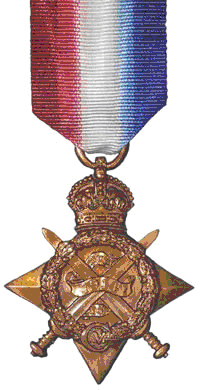
| Medals of Richard Gibson Little from the First World War. The medals are all inscribed: 15891 Pte R G Little, York. & Lanc. R. The medals are (left to right): Allied Victory Medal (Wilfred), 1914-15 Star (Pip) and British War Medal (Squeak). |